What is enough for a free person?
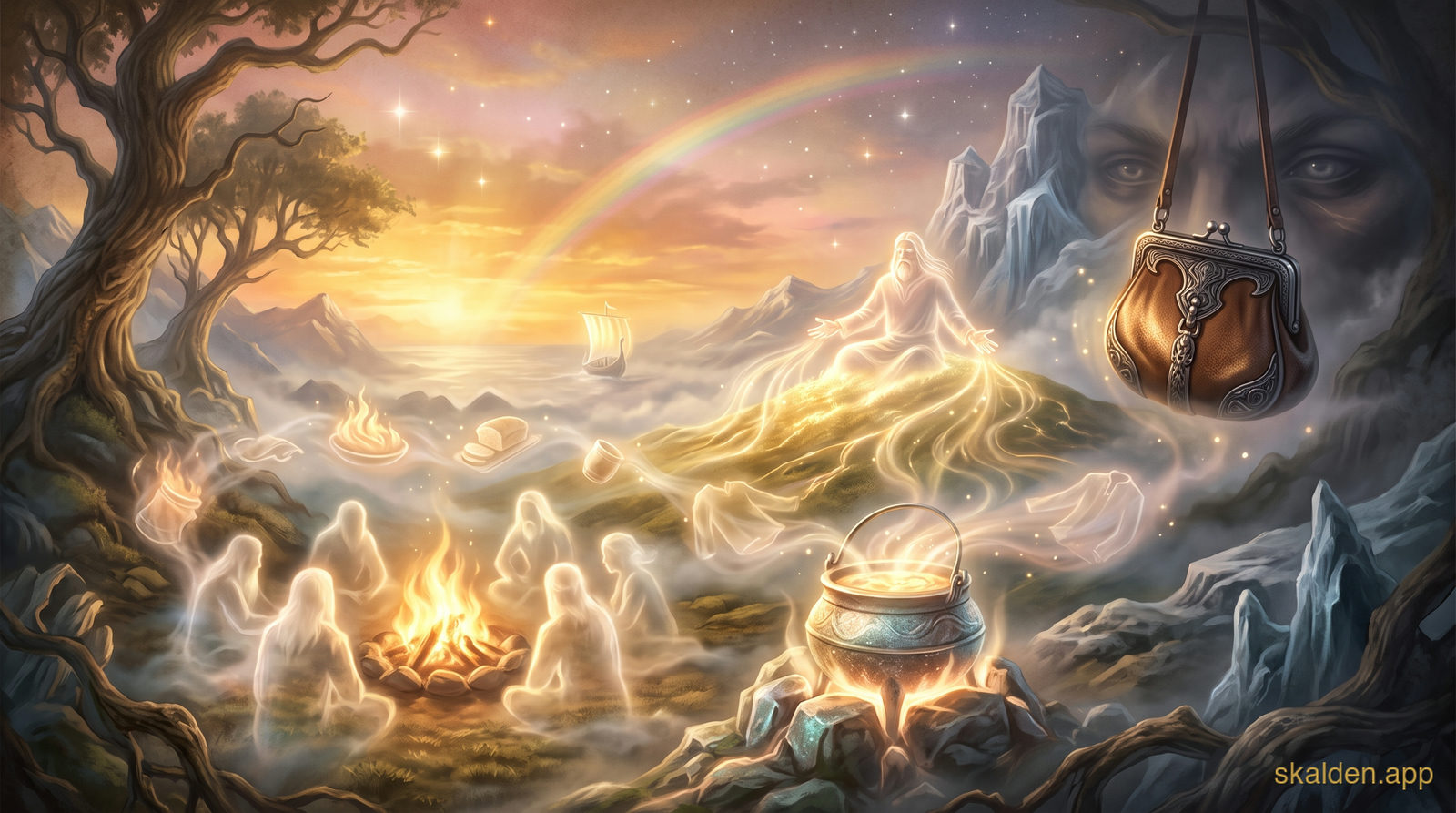
Freyja: # What Is Enough for a Free Person You ask me a question the old poems answer without flinching, and I will not soften what they say. The Hávamál — the High One's own counsel, set down in the Codex Regius by hands that came after mine — gives it in one blunt breath. Stanza three: "Fire he needs / Food and clothes." That is where the reckoning begins. A man come in from the cold, his knees still shaking from the road, needs warmth at the hearth, bread in his belly, dry cloth on his back. Not gold. Not a lord's favour. Not the admiration of the hall. The body's plain requirements, and then he is a man again, and free. And stanza fifty-two sharpens it further: "No great thing needs / With half a loaf." Half a loaf and a tilted cup — that is what buys a friend, that is what makes a guest welcome, that is the measure of a hospitable house. Not the feast, not the boasting board. Half a loaf. The old wisdom knows what the greedy forget: that abundance is not what the free need, but sufficiency shared. A woman who must have a whole loaf to feel rich is already a thrall to her wanting. The one who can set half before a stranger and call it enough — she is the free one, and her hall is the warmer for it. Look then at Hymiskvitha, stanza thirty-four, where the gods come away from the giant Hymir's hall with the great brewing kettle wrested from him — "Enough shall it be / Forth from our house" — and the meaning turns. Enough is not only what fills the belly; it is also what is carried away, what is won and taken home to serve the drinking of many. The kettle is enough because it will pour for the whole company at Ægir's feast. What is enough for the free is what serves the shared cup, not what hoards it. And now hear the other side, for the old tales are honest about how the world actually runs. In Egils saga, chapter ten, Thorolf of Sandness gathers everything Halogaland can yield — herring and seal and eggs and every provision — keeps a hundred freedmen at his hall, tends his ships and his weapons, and by this he becomes a mighty man. Is that enough, or is that already too much? The saga does not scold him. He is open-handed, liberal, a friend to the great and the near alike. His abundance is enough because it flows outward — it is not clenched. The moment wealth stops moving, the moment a hand closes on it, the free person is already less free. Thorolf's hundred freedmen eat from his fishing; his generosity is the current that keeps his own life a river and not a stagnant pool. pause Later in that saga, of course, that same abundance will draw the king's envy down on him, and the poems know this too: the mighty ones fall hardest. Enough that draws no envy may be the truer measure. And there is a colder passage still — Bandamanna saga, chapter five — where the old wandering Ufeig sits among the judges with a purse under his cloak, and lets it rise and lets it sink, and lets it rise and lets it sink, and watches every man's eye follow the leather. He is speaking to them of right and truth against the quibbles of law, of oaths sworn and judgment owed — and yet their gaze cannot leave the purse. That is the saga's terrible mirror. A man who thought he had enough discovers, in the sway of another's silver, that he had less than he believed. The purse was never full enough to make him unfree until he saw it swing. So enough is also this: what you can look upon without your eye being pulled after it. The free person is the one whose gaze does not follow the purse. So gather the strands. Fire, food, clothes — the body's plain due. Half a loaf, ungrudged — the hand's freedom to give. A kettle carried home for the shared cup — abundance that flows. Open hands like Thorolf's — wealth that becomes friendship and not a wall. And Ufeig's warning: eyes that do not chase the swinging purse. That is the old measure of enough, and it is not small, and it is not the same as poverty. It is the sufficiency of one who owes nothing to their own wanting. I will say the harder thing too, because I do not pretend to be softer than I am. Enough for a free person is also the courage to name it enough and stop. Most of us do not become unfree because we lack — we become unfree because we cannot see the line where sufficiency was already ours, and we crossed it looking for more. The Hávamál is patient with our hungers, but it does not bless them. Fire, food, clothes. Half a loaf. The rest is a question you must answer at your own hearth. What have you already, that you have not yet called enough?
This conversation was had on Skalden — walk into the Norse world.